Most event decisions get made off a floor plan, a fabric swatch, and a sentence that starts with "picture this." That's a lot to ask of a client who's about to sign off on a five-figure design budget. They nod along in the meeting, then go home and can't quite describe what they agreed to.
That gap — between what you can explain and what a client can actually see — is where budgets get renegotiated, timelines slip, and "that's not what I pictured" shows up two weeks before load-in.
The Floor Plan Isn't the Vision
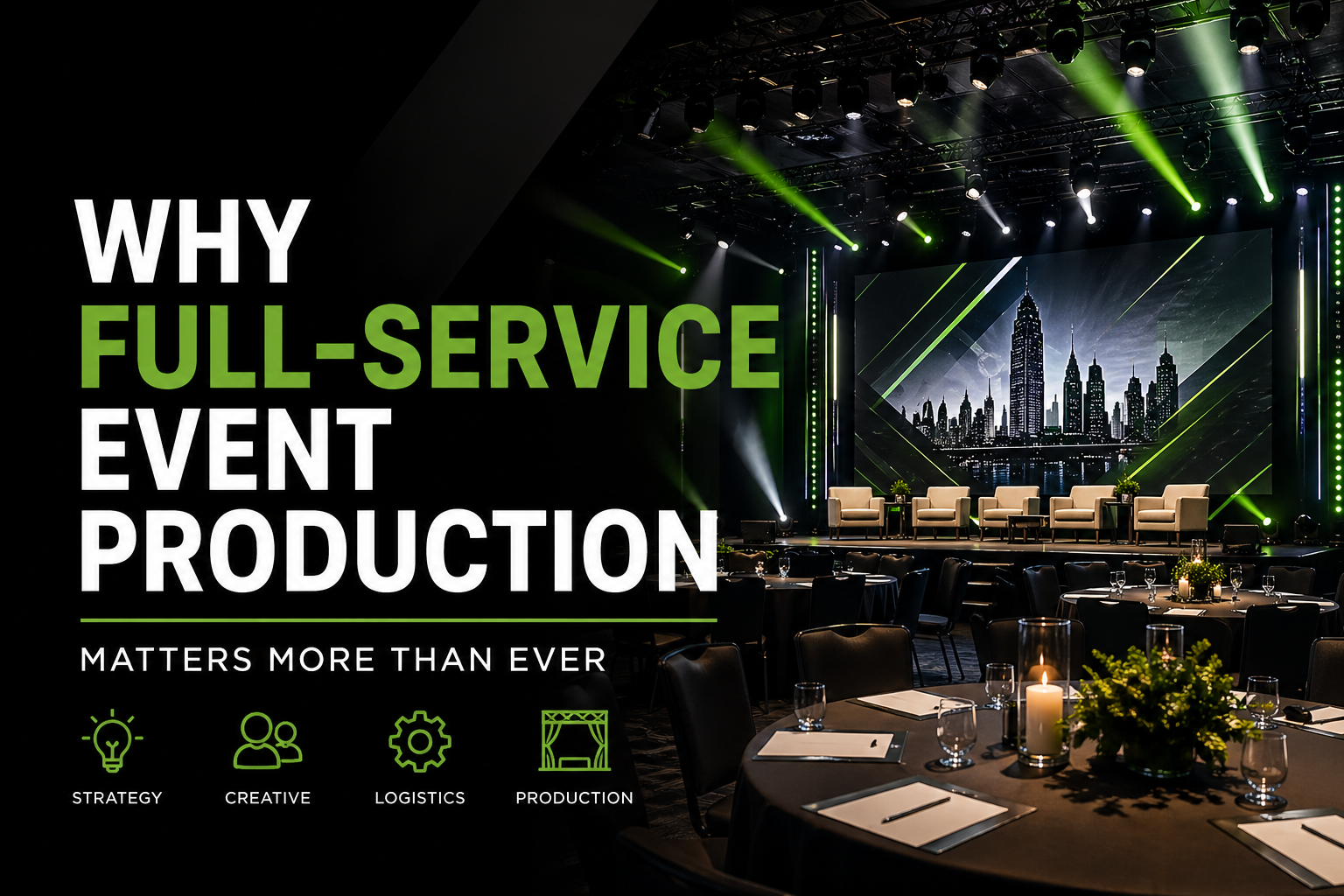
A floor plan tells you where the stage goes. It doesn't tell you what the room feels like when the uplighting hits the drape, or whether the branded backdrop reads at the scale of the venue instead of a mockup on someone's laptop. Clients aren't being difficult when they hesitate to approve a concept from a swatch board — they're being reasonable. Nobody should have to spend real money on a mental image. A 3D rendering closes that gap before it becomes a problem. It turns "trust us" into "here's exactly what you're getting," which is a very different conversation to have with a budget owner.
What It Actually Prevents
The value isn't the rendering itself — it's what doesn't happen because of it:
- The late-stage scope change. Swapping a backdrop color or a stage configuration after fabrication has started costs real money. Catching it at the concept stage costs nothing.
- The stakeholder standoff. When three people signed off on three different mental pictures of "elegant," a rendering forces agreement before anyone's spent a dollar on materials.
- The day-of surprise. The worst time to find out a design element doesn't work at scale is when it's already built. A rendering surfaces that at the one point in the process where it's still just a file, not a fabrication.
From Concept to Installation
This is the reason our Creative Design process starts with a brief and a concept presentation before anything gets built. We gather your brand guidelines and inspiration, translate that into mood boards and 3D renderings, refine the details once everyone's looking at the same picture, and only then move into fabrication and installation. Every stage after the rendering is execution, not guesswork.
If you've ever approved a design based on someone's description and then held your breath until move-in day, you already know why this matters. A rendering doesn't just show you the event — it's the thing standing between your budget and an expensive surprise.
Ready to see your event before it's built? Get a quote and we'll start with a concept, not a guess.